Can I Run an EV Charging Cable Across the Pavement in the UK?
Quick answer: you should not assume you can simply run an EV charging cable across a public pavement in the UK. In England, the relevant highway authority decides whether a cross-pavement charging solution can be installed, and local policies vary. A loose cable, a temporary cable protector and a permanent pavement channel are not treated in the same way. Scotland, Wales and Northern Ireland have their own roads frameworks. Check the relevant authority before buying or installing anything.
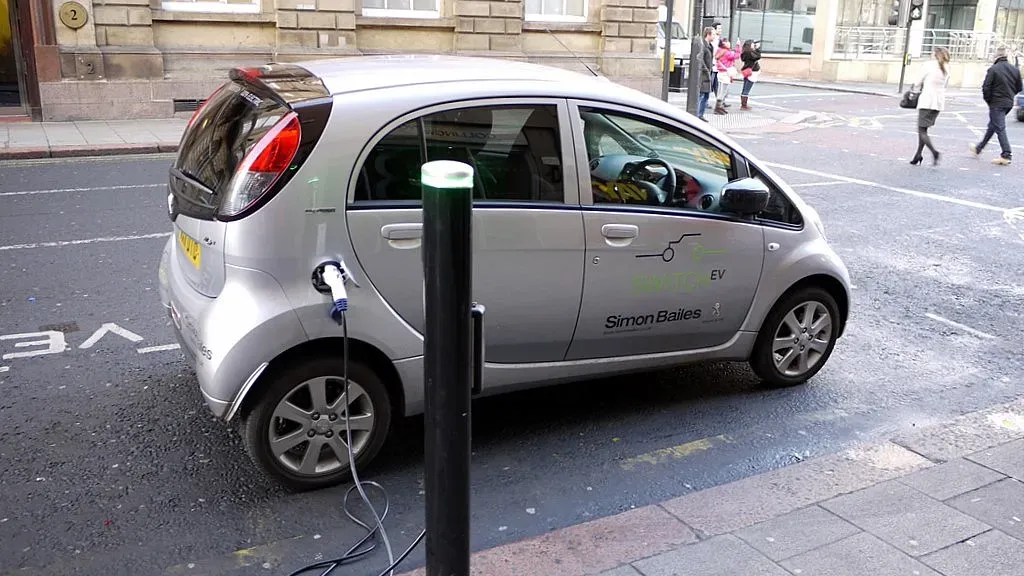
Photo: Gordon Hatton / Wikimedia Commons · CC BY-SA 2.0. Cropped to 16:9, resized and converted to WebP; same licence.

At a glance
The important distinction is not simply whether the cable is physically protected. It is who controls the pavement, what the relevant authority permits, and what type of cross-pavement solution you intend to use.
| Option | Can you assume it is allowed? | Approval position | Main issue |
|---|---|---|---|
| Loose charging cable | No | Depends on local policy | Trip hazard, accessibility and liability |
| Cable protector / mat | No | Local policy varies significantly | Reduces the trip hazard but does not automatically make the cable permitted |
| Permanent pavement channel / gully | No | Highway or roads authority approval is normally required on public highway | Highway works, licensing and site suitability |
| Permanent under-pavement connection | No | Authority approval and street-works processes apply | Permanent apparatus within or beneath the highway |
| Overhead / swing-arm solution | No | Check the relevant authority before considering one | Clearance, highway consent and local restrictions |
Is it legal to run an EV charging cable across the pavement?
There is no reliable one-sentence answer that applies to every pavement in the UK.
In England, Department for Transport guidance says that the decision to allow a cross-pavement solution in the public highway rests with the relevant local authority. The same guidance says trailing cables can create a trip hazard, particularly for people with limited mobility or sensory impairments, and may amount to a breach of Part IX of the Highways Act 1980.
Section 178 of the Highways Act 1980 states that a person must not place a cable, wire or similar apparatus over, along or across a highway without the highway authority's consent. In practice, authorities can attach conditions to that consent.
That does not justify either of the simplistic claims sometimes seen online: that running an EV cable across a pavement is automatically permitted everywhere, or that every form of cross-pavement charging is prohibited throughout the UK.
The first practical question is whether the pavement or footway is part of the public highway.
For an adopted public highway in England, the highway authority controls what can be installed within it. Where a road has not been adopted, DfT guidance says the resident should seek permission from the relevant landowner instead.
Authorities may also need to consider:
- pedestrian safety and accessibility;
- pavement width and construction;
- underground utilities;
- how highway works will be carried out and reinstated;
- maintenance responsibilities;
- liability arrangements;
- parking conditions;
- the position of the chargepoint itself.
And because roads and highways are dealt with differently across the four UK nations, the England-specific DfT guidance should not be treated as a UK-wide permission system.
Why does the answer depend on your council?
Because the pavement outside your home is normally not yours to alter simply because your property faces it.
In England, DfT guidance leaves the decision on permitting cross-pavement installations in the public highway with the relevant local authority. Depending on the ownership and installation model, permissions can involve the highway authority, the local planning authority and street-works processes. In two-tier areas these functions may sit with different councils.
An authority may:
- prohibit loose cables;
- allow or provide guidance on cable protectors;
- operate an approved pavement-channel scheme;
- restrict channels to a pilot;
- refuse channel installations for the time being;
- require licences, agreements or approved contractors;
- impose property, pavement and parking suitability criteria.
That is why seeing a neighbour charging across the pavement proves very little. Their arrangement may have specific permission, may be on private land, may fall under a different local policy, or may simply not have been assessed by the authority.
A sensible first search is:
"[your council or highway authority] EV cross pavement charging"
If you live in an English two-tier council area, remember that the county council may be the highway authority while the district council handles planning.
Loose cable vs cable cover vs pavement channel: what is the difference?
These solutions are often discussed as if they were interchangeable. They are not.
For the current OZEV household on-street parking grant, the required cross-pavement solution must not be temporary. GOV.UK specifically excludes cable covers and mats placed on top of a cable from satisfying that requirement.
Loose cable across the pavement
A cable simply lying across a public pavement creates the most obvious pedestrian hazard.
Some authorities prohibit this approach. Cambridgeshire says loose cables across the pavement are not allowed, while Somerset states that charging on the public highway by trailing a cable across the pavement is not permitted.
Do not assume that using the cable only at night, removing it after charging or placing warning signs changes the relevant local policy.
Cable protector or mat
A cable protector is a temporary ramp or cover placed over the charging cable.
It can reduce the immediate trip hazard, but reducing the hazard does not automatically give you permission to use the cable across a public footway.
Current policies demonstrate how much the answer varies. Cambridgeshire does not permit trailing cables either with or without a protector. Hampshire publishes guidance for residents who decide to charge across the footway and says a cable should be laid flat using a suitable protector, but the council does not provide written approval for trailing a cable. Northern Ireland has a formal application process for specifically designed cable protectors.
Temporary covers and mats also do not satisfy the permanent cross-pavement requirement for the OZEV on-street parking grant.
Permanent pavement channel or EV cable gully
A pavement channel is a narrow recessed system installed into the footway between the property and kerb.
During charging, the EV cable is placed into the channel so that it sits below or flush with the walking surface. The cable is removed again when charging is complete.
DfT identifies embedded cable channels, sometimes called gullies, as one of the two main types of cross-pavement solution currently available.
The main advantage is accessibility: the cable is not simply lying across the walking surface.
The important limitation is that the channel involves modifying the highway. Where the pavement is public highway, this should be done only through the relevant authority's approved process.
Permanent under-pavement connection
DfT also identifies systems where permanent charging infrastructure runs below the pavement and connects to the vehicle through a removable bollard, lance or another connector.
These can avoid having a conventional charging lead sitting across the footway, but they still involve apparatus within the highway and therefore require the appropriate highway and street-works arrangements.
Overhead arms, swing arms and charging bridges
Overhead systems carry the charging cable above the pavement instead of through it.
DfT describes charging bridges as an emerging technology and does not cover them in detail in its main England cross-pavement guidance.
They should not be treated as a way around highway rules. Section 178 of the Highways Act 1980 expressly covers overhead cables and similar apparatus placed over, along or across a highway, requiring the highway authority's consent.
Scotland and Northern Ireland operate under different roads frameworks, so do not extrapolate that English and Welsh statutory route to the whole UK. In all cases, check the relevant authority before considering an overhead installation.
| Method | How it works | Can you assume it is permitted? | Main approval issue | Meets the grant's permanent-solution requirement? |
|---|---|---|---|---|
| Loose cable | Cable lies directly across the footway | No | Trip hazard and local highway policy | No |
| Cable protector / mat | Temporary ramp covers the cable | No | Authority may allow, restrict or prohibit it | No |
| Pavement channel / gully | Recessed channel temporarily holds the charging cable | No | Highway approval, installation and licensing | Potentially, subject to the full grant criteria |
| Permanent under-pavement solution | Infrastructure passes beneath the pavement | No | Street works and apparatus within the highway | Potentially, subject to the full grant criteria |
| Overhead charging bridge / arm | Cable crosses above pedestrian space | No | Highway/roads consent, clearance and local policy | Check the specific solution against current grant rules |
Do I need council permission to charge across the pavement?
For a permanent cross-pavement solution installed in public highway, you should expect the relevant highway or roads authority to be involved. Temporary cables and protectors are more variable, so their local policy must also be checked.
A practical process is:
- Check whether the pavement is public highway or private land.
- Identify the correct highway or roads authority.
- Find its current EV or cross-pavement charging policy.
- Confirm which solutions it permits.
- Ask whether an approved supplier, licence or contractor is required.
- Check planning requirements separately where applicable.
- Do not cut into or alter the pavement yourself.
For England, current DfT guidance lists possible requirements including Section 50 licences or work permits, traffic-related permissions and planning permission. Works involving apparatus within the street are also subject to street-works requirements.
September 2026 planning update
There is an important change in progress in England, but it is not yet in force.
Under the current framework, a cross-pavement installation can involve up to three separate consent routes: highway-authority permission, planning permission and street-works permission. The UK Government consulted on creating a new permitted development right so qualifying cross-pavement EV charging installations would no longer need a separate planning application.
On 11 September 2026, the government published its consultation outcome and confirmed that it intends to implement the proposed changes. However, the necessary secondary legislation still has to be laid before Parliament and then brought into force. GOV.UK says that step is planned for autumn 2026.
So, as of September 2026, do not assume the new permitted development right already applies. Highway-authority consent and street-works requirements would remain necessary even after the proposed planning change takes effect.
Can I install my own pavement channel?
Do not cut or modify a public pavement yourself.
The current OZEV grant guidance explicitly tells applicants that they must not install cross-pavement solutions on the public road network themselves. Highway-authority consent is required and must be evidenced as part of a grant application.
A public footway may also contain electricity, telecommunications, water and other utility infrastructure below its surface.
Depending on the local scheme, an installation can involve:
- a highway licence or consent;
- an approved supplier;
- an authorised highways contractor;
- utility checks;
- specified construction materials;
- pavement reinstatement standards;
- ongoing maintenance and liability arrangements.
In England, DfT guidance explains that a Section 50 licence under the New Roads and Street Works Act 1991 may be needed where someone without statutory street-works powers wishes to place or retain apparatus in the street. The licence can also establish responsibility for maintenance, reinstatement and eventual removal.
Cambridgeshire's trial, for example, requires the channel to be installed into the footway by an approved highways contractor and involves council licensing.
Can I just use a cable protector?
Possibly, but a cable protector does not automatically make cross-pavement charging permitted.
A protector can make the cable flatter and reduce the trip risk, but the relevant highway or roads authority can still restrict or prohibit its use.
Current examples illustrate the difference:
- Cambridgeshire: trailing cables are not permitted, with or without a cable protector.
- Slough: its approved approach for crossing a public footway is its pavement-channel scheme, and temporary cable covers or mats are not permitted as an alternative within that arrangement.
- Hampshire: advises residents using a trailing cable to lay it flat with a protector, but says it cannot provide written approval for trailing a cable over the footway.
- Northern Ireland: residents can apply to the Department for Infrastructure for consent to use a specifically designed cable protector.
The practical conclusion is simple: a cable protector may reduce the trip hazard, but that does not mean the relevant authority permits it.
Why your council matters: real examples
Last checked: September 2026
These are not minor differences in wording.
Cambridgeshire does not currently allow a resident simply to place a protector over a cable. Hampshire provides guidance for doing so safely but does not give written approval. Somerset currently prohibits trailing cables and has not yet opened its planned channel pilot. Slough already has an approved channel route for suitable properties.
Different highway authorities genuinely take different approaches.
| Authority | Loose cable / cover approach | Permanent channel position | Notable condition or cost | Last checked |
|---|---|---|---|---|
| Slough Borough Council | Its channel is the only approved method for running a charging cable across a public footway; temporary covers or mats are not an approved substitute | Approved channel trial/scheme available through the council's partner | £399 including VAT resident contribution for standard supply and installation; additional costs may apply to complex sites | Sep 2026 |
| Cambridgeshire County Council | Loose cables and cable covers are not permitted | Two-phase trial is being developed; applications have not yet launched | Approx. £1,000 channel; published approximate total project cost £2,500–£3,000 including listed licences, chargepoint and planning where required | Sep 2026 |
| Somerset Council | Trailing a cable across the pavement is not permitted | Channels are not currently permitted generally; controlled pilot is being developed | Pilot expected in early 2027, subject to procurement and legal arrangements; application process not yet open | Sep 2026 |
| Hampshire County Council | Provides safety guidance for cable protectors but does not give written approval for trailing a cable | Cable gullies/cross-pavement channels are not currently permitted | Council says it has funding to investigate the feasibility of cross-pavement solutions | Sep 2026 |
How much does a cross-pavement EV charging channel cost?
There is no reliable single UK average that applies to every property.
The total cost can include:
- the channel or other cross-pavement hardware;
- highways contractor installation;
- council or licence fees;
- surveys and utility checks;
- the home chargepoint;
- electrical installation or supply upgrades;
- planning fees where applicable;
- insurance requirements imposed by a local scheme.
Local published examples show why a national headline price can be misleading.
Slough currently charges an approved applicant £399 including VAT towards supply and installation of its approved channel. The council says Department for Transport funding covers most installation costs, while complex sites may incur additional charges.
Cambridgeshire publishes an indicative cost breakdown of £190 for its Section 178 agreement, £295 for a Section 171 licence, approximately £1,000 for channel supply and installation, £262 for planning permission where required and around £1,000–£1,500 for a home chargepoint. It gives an approximate total of £2,500–£3,000.
These are local examples, not UK average prices.
Before comparing quotes, check which costs are covered by your authority's scheme, which are payable separately and whether local or national funding applies.
Can I get a grant for an EV charger if I park on the street?
Yes, if you meet the eligibility rules. The Electric Vehicle Chargepoint Grant for Households with On-Street Parking currently covers 75% of the eligible cost of buying and installing a chargepoint socket, up to a maximum of £500. Funding is confirmed until 31 March 2027.
The scheme applies to eligible residential properties in England, Wales, Scotland and Northern Ireland.
Current key conditions include that you:
- own or rent the residential property where you live;
- do not have private and exclusive access to off-street parking such as a driveway, garage or residential car park;
- have adequate on-street parking;
- own, lease, have ordered or otherwise qualify through an eligible vehicle arrangement;
- install a cross-pavement charging solution alongside the chargepoint;
- use a cross-pavement solution that is not temporary;
- obtain the relevant highway-authority consent;
- obtain any planning permissions that are still required;
- use an OZEV-approved installer for the chargepoint;
- apply before installation and wait for OZEV to confirm eligibility before the chargepoint is installed.
Temporary cable covers and mats do not satisfy the scheme's permanent cross-pavement requirement.
The grant is specifically support towards the purchase and installation of the EV chargepoint/socket. Do not assume that the £500 maximum also pays for the complete pavement channel, highway licences or all associated civil works. Separate local funding may sometimes support those costs.
For example, if the eligible cost of buying and installing your chargepoint is £800, 75% is £600. Because the grant is capped at £500, the maximum grant would be £500.
It is also not retrospective. GOV.UK says the chargepoint must not already have been installed and must not be installed before OZEV confirms that you are eligible.
Most importantly, qualifying for the grant does not override your highway authority's decision on whether a cross-pavement solution can be installed at your property.
Does a pavement channel give me the parking space outside my house?
No.
A pavement channel does not normally give you ownership of, priority over or reserved access to the parking space outside your property.
The official OZEV grant guidance expressly says the grant does not confer ownership, exclusive use or reserved access to any on-street parking space and cannot guarantee that a space will be available.
The same principle appears in local schemes. Slough says parking bays cannot be reserved for individual properties. Cambridgeshire says no parking space will be allocated to channel users, and Somerset says a cross-pavement channel would not guarantee access to parking outside the property.
This is particularly important for terraced streets.
If you rarely manage to park within charging distance of your home, a pavement channel may solve the cable-crossing problem without solving the parking problem.
What if someone parks outside my house?
Normally, you wait until a suitable legal space becomes available.
Some local schemes allow the cable to run for a limited distance along the kerb once it reaches the road edge. Slough recommends a maximum distance of approximately 10 metres, while Cambridgeshire's proposed trial also sets a 10-metre maximum. Hampshire gives similar guidance.
Those distances are local rules or guidance, not a universal UK allowance.
You should not block the pavement, leave excess cable where it creates a hazard, use cones or signs to claim a public parking space, or assume that installing a channel gives you priority over another driver.
Assess how often you can actually park close enough to your home before spending money on the installation.
Can the cable cross the road?
Do not plan a normal domestic cross-pavement installation around running the charging cable across the carriageway.
The council schemes checked for this guide are designed for the vehicle to remain on the same side of the road as the property.
Slough expressly says cables must not cross the road and the vehicle must be parked on the same side as the property. Cambridgeshire and Hampshire publish the same requirement or guidance. DfT's England guidance also recommends that resident agreements include a condition prohibiting the charging cable from being run across the road.
A pavement channel solves the crossing of the footway between the property and kerb. It should not be treated as permission to extend the charging cable across moving traffic.
What if my council does not allow cross-pavement charging?
A refusal does not make an improvised extension lead a suitable alternative.
Practical options include:
- public residential or on-street chargepoints;
- workplace charging;
- destination charging;
- community or shared charging where available and appropriate;
- asking your council to consider your street for public chargepoints;
- registering for or waiting for a planned local cross-pavement pilot;
- creating legitimate off-street parking where the property, planning and highway situation makes that feasible.
Somerset, for example, is using Local Electric Vehicle Infrastructure funding to expand public charging and allows residents to suggest locations for additional chargepoints while its controlled cross-pavement pilot is being developed.
For a broader look at those alternatives, see our guide Electric Car Charging Without a Driveway.
What should I check before buying a home EV charger?
If you live in a terraced house or another property that relies entirely on on-street parking, resolve the pavement issue before choosing your wallbox.
- Check whether the pavement is public highway or private land.
- Identify the relevant highway or roads authority.
- Find its current cross-pavement EV charging policy.
- Confirm which solutions it permits: loose cable, protector, channel or another approved system.
- Check whether you can regularly park within the permitted charging distance.
- Check planning, landlord, freeholder or other property permissions where applicable.
- Check OZEV grant eligibility before installing anything.
- Get quotes from installers and channel suppliers that meet the relevant scheme requirements.
- Purchase and install only once the permissions, grant sequence and practical parking situation are clear.
That order can prevent you from buying a chargepoint that you cannot legally or practically connect to a vehicle parked on the street.
What about Scotland, Wales and Northern Ireland?
The Department for Transport cross-pavement guidance discussed throughout this article explicitly applies to England. DfT itself notes that road works are devolved and that Scotland, Wales and Northern Ireland handle access to roads differently.
England
In England, the local highway authority decides whether a cross-pavement solution can be installed on the public highway.
Current processes can involve Section 178 consent, planning permission and street-works permissions. The government confirmed on 11 September 2026 that it intends to introduce new permitted development rights covering qualifying cross-pavement solutions, but the secondary legislation has not yet commenced.
Scotland
Scotland operates under its own roads framework.
Transport Scotland states that the Roads (Scotland) Act 1984 places responsibility for the road network and control of private installations with roads authorities. It also says local authorities can permit private apparatus under the New Roads and Street Works Act 1991, meaning individual decisions on cross-pavement charging sit with Scotland's local authorities.
The Scottish Collaboration of Transport Specialists, or SCOTS, published initial EV cross-pavement guidance in June 2026. SCOTS explicitly says that each authority should set its own policy and approach, while its initial guidance focuses particularly on gully-type installations and the associated accessibility and legal issues.
Scotland also has separate financial support. Transport Scotland launched a cross-pavement charging pilot in 2025 offering grants of up to £3,500 per household for eligible installations in participating local-authority areas. Transport Scotland's 2026 delivery material says the scheme is continuing during 2026. Availability therefore depends on the participating authority and current scheme conditions rather than being an automatic Scotland-wide entitlement.
Scottish residents should check their own council's roads authority policy before choosing a solution.
Wales
Do not treat the DfT England cross-pavement guidance or the September 2026 English permitted-development proposal as Welsh policy.
Welsh Government's latest road statistics confirm that Welsh Government is the highway authority for motorways and trunk roads, while local authorities are responsible for the other public roads, including the local streets where residential cross-pavement charging would normally arise.
Transport for Wales is working with Welsh Government and local authorities on EV charging infrastructure, but a resident should still check the relevant Welsh local highway authority before placing or installing equipment across a public pavement.
There is no blanket right to run a domestic EV charging cable across a public footway simply because the vehicle is parked outside the property. The applicable highway, planning and street-works requirements need to be checked for the specific location.
Northern Ireland
Northern Ireland now has a specific cross-pavement charging process.
The Department for Infrastructure allows eligible residents without off-street parking to apply either to use a specifically designed cable protector or to enquire about a cross-pavement channel. The live nidirect application requires information about the proposed protector and evidence such as insurance cover where relevant.
Permanent pavement channels are handled through DfI's Street Works Licensing process. DfI published formal guidance for staff dealing with applications for permanent sub-surface channels in October 2025.
DfI's first review of the cable-cover approach, published on 23 July 2026, reported high user satisfaction and no reported safety issues during the initial review period. The official application service remains available as of September 2026.
The important point is that Northern Ireland has its own application and approval system. Its treatment of cable protectors should not be assumed to apply in England, Scotland or Wales.
Sources
- Department for Transport / OZEV cross-pavement guidance
- Government response on permitted development rights
- OZEV on-street parking grant
- Highways Act 1980
- Slough Borough Council
- Cambridgeshire County Council
- Somerset Council
- Hampshire County Council
- Transport Scotland cross-pavement information
- SCOTS resources
- Welsh Government road statistics
- Transport for Wales
- nidirect
- Department for Infrastructure review
Frequently asked questions
Can I put an EV cable across the pavement in the UK?
Do not assume it is permitted. The position depends on the relevant highway or roads authority, the type of solution and which UK nation you live in. Check the authority responsible for the pavement before charging across it.
Can I use a cable protector for EV charging?
Possibly. Some authorities permit or provide guidance for cable protectors, while others prohibit them. A temporary protector also does not satisfy the permanent cross-pavement requirement for the current OZEV household on-street parking grant.
Do I need council permission for an EV charging cable?
For a permanent installation within a public pavement, expect the relevant highway or roads authority to be involved. Temporary cables and protectors are subject to local policy, so their use should also be checked.
Can the council install a channel in the pavement?
Some authorities operate or are developing approved pavement-channel schemes using authorised suppliers and highways contractors. Others currently prohibit them or are only running limited pilots.
Can I install an EV pavement channel myself?
Not on the public road network. Do not cut into a public pavement yourself. Highway consent, licensing, approved contractors and utility checks may be required.
Does an EV pavement channel reserve my parking space?
No. A channel does not normally give you ownership of or priority over the public parking space outside your home.
Can I get a grant for a pavement EV charger?
Eligible households can currently receive 75% of the cost of buying and installing an eligible chargepoint socket, capped at £500, under the OZEV household on-street parking grant. A qualifying non-temporary cross-pavement solution is required, but the grant should not be assumed to cover the full cost of that pavement solution.
Can an EV charging cable cross the road?
Normal domestic cross-pavement schemes are designed for a vehicle parked on the same side of the road as the property. The authorities and schemes checked for this guide prohibit or advise against running the charging cable across the carriageway.
You might also be interested in

Electric Car Charging Without a Driveway
No driveway? Compare pavement channels, on-street chargers, workplace charging, council rules and the £500 EV grant available in the UK in 2026.

Can I Install a 7kW EV Charger With a 60A Main Fuse? UK Guide
A 60A main fuse does not automatically rule out a 7kW EV charger. See how maximum demand, load balancing and DNO approval affect UK installs.

Can I Install an EV Charger Before My Supply Is Unlooped?
Some EV chargers can be installed before a looped supply is unlooped. See when load limiting may be used and what your DNO must approve.